
Published: 12 May 2026 | Author: Eden Lau, Founder & CEO, Tocanan.ai
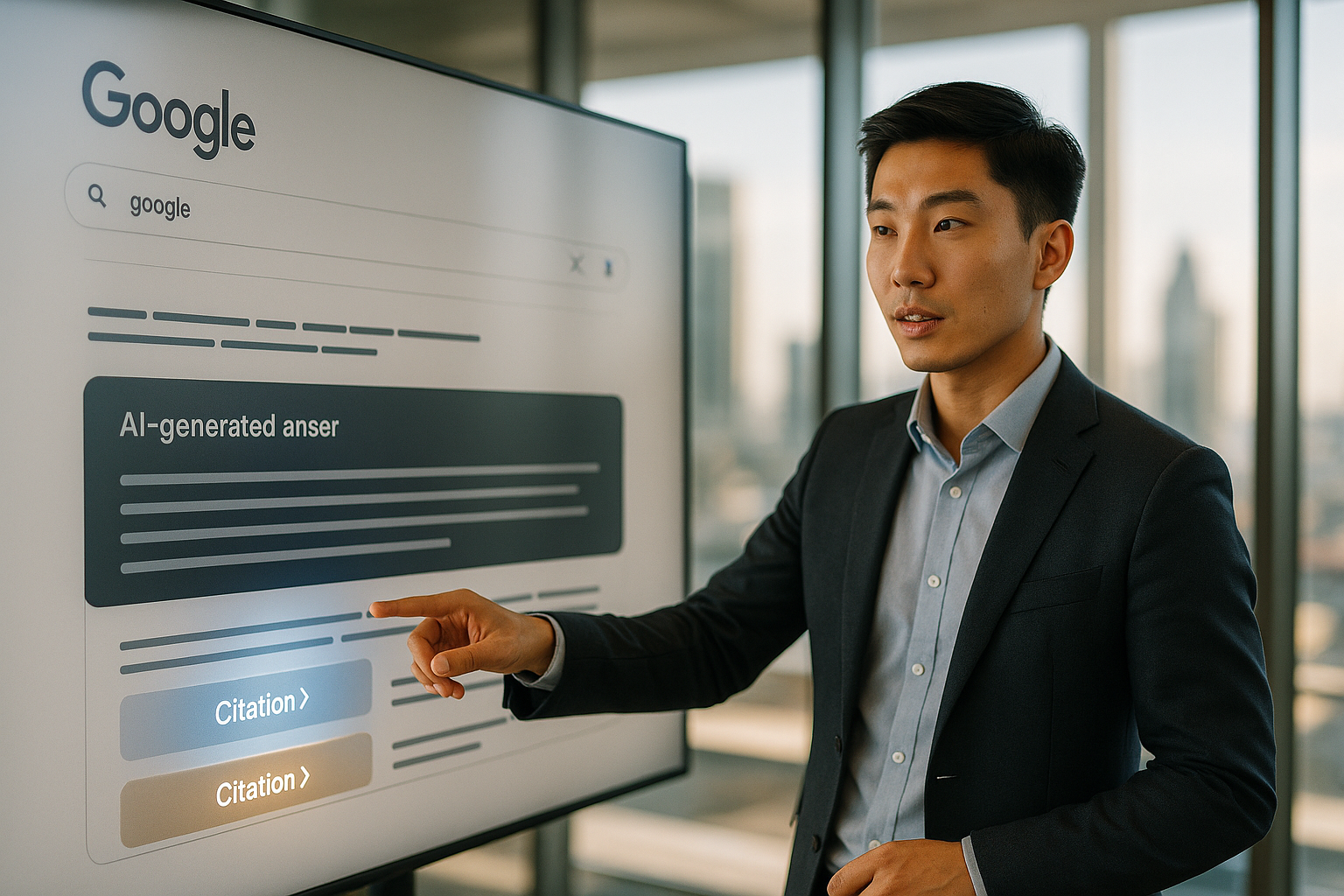
On May 6, 2026, Google announced five new ways that AI Overviews and AI Mode surface links to websites within Search. Written by Hema Budaraju, VP of Product Management at Google Search, the post signals something significant: Google is responding to criticism that AI Overviews suppress web traffic — by creating more citation surfaces, not fewer.
For brands invested in Generative Engine Optimization (GEO), this isn’t just a product update. It’s a structural expansion of the AI citation landscape that changes how visibility is earned, displayed, and — critically — still not measured by Google’s own tools.
Here’s what was announced, what it means, and what to do about it.
The Context: AI Overviews Are Now the Default Search Experience
Before examining the five new surfaces, the scale matters.
AI Overviews now appear on 48% of all Google queries as of April 2026 — up from 31% a year earlier (BrightEdge data). Google reports 2 billion monthly users interact with AI-generated responses in Search.
This is no longer an experiment. It’s the dominant search interface for nearly half of all queries.
The impact on traditional organic results is well-documented:
- Organic click-through rates drop 34.5–61% when an AI Overview appears above traditional results
- Yet brands cited within AI Overviews earn 35% more clicks than uncited competitors
- AI-referred visitors convert at 4.4x the rate of traditional organic visitors (14.2% vs 2.8%)
The message is clear: being in the AI Overview is now more valuable than ranking #1 in traditional results. But the path to getting there — and staying there — just changed.
The 5 New Citation Surfaces: What Google Announced
1. “Explore New Angles” — Further Exploration Links
What it is: At the bottom of AI Overview responses, Google now displays curated links to articles and in-depth analyses that explore different facets of the query topic. These aren’t generic “related searches” — they’re editorially weighted links to content that demonstrates topical depth and authority.
Google’s framing: These links help users “explore new angles” on topics surfaced in the AI response — connecting them with publishers who provide original analysis, unique perspectives, and comprehensive coverage.
Why it matters: This is the first AI Overview surface that explicitly rewards topical authority. Google is algorithmically identifying content that goes beyond surface-level answers and giving it prominent link placement after the AI response — the exact moment a user wants to go deeper.
2. “Easily Access Your News Subscriptions” — Subscription Links
What it is: When a user has paid subscriptions to news publishers, AI Overviews now highlight content from those publications directly within the response. These links are labeled with a subscription indicator.
Google’s data: “People were significantly more likely to click links that were labeled as their subscriptions” — a direct quote from the announcement that confirms labeling drives engagement.
Why it matters: Google is creating a citation preference layer based on user behavior. Subscribed publications get preferential visibility — effectively a trust signal that compounds over time.
3. “Get Advice from People Who Have Been There” — Community Advice Panels
What it is: Dedicated panels within AI Overviews that surface perspectives from Reddit, forums, social media platforms, and other firsthand sources. Critically, these panels display creator names, handles, and community names — not just anonymous excerpts.
Why it matters: This is Google formally elevating user-generated content (UGC) and community discourse into AI citation architecture. It’s not buried in a “Discussions and forums” section below traditional results — it’s inside the AI response.
4. “See Links Right Where You Need Them” — Expanded Inline Links
What it is: More citation links embedded directly within the AI response text, positioned next to relevant bullet points, statements, and claims. Previously, AI Overviews concentrated citations in a sidebar or footer. Now, inline links appear throughout the response body.
Why it matters: This is the highest-intent citation surface. A user reading a specific claim and seeing a link right beside it is far more likely to click than someone scanning a list of sources at the bottom. More inline citation slots means more opportunities — and more competition for each one.
5. “Get More Context on Linked Websites” — Website Hover Previews
What it is: When users hover over an inline link within an AI Overview, a preview card appears showing the site name and page title. This gives users context about the source before they click.
Why it matters: Your brand name and page titles are now visible within the AI response experience — even if the user never clicks through. This is ambient brand visibility at the point of AI-mediated discovery.
What Each Surface Means for Your GEO Strategy
The five surfaces don’t require five separate strategies. They reinforce a coherent GEO approach — but with specific tactical implications.
Further Exploration Links → Invest in Topical Depth
The “Explore new angles” feature rewards content that goes beyond answering the immediate question. This means:
- Pillar content and topic clusters are now directly rewarded with prominent AI citation placement
- Original analysis, proprietary data, and unique frameworks are the differentiators — not keyword-stuffed listicles
- Content that presents multiple angles on a topic (comparison analyses, pros/cons, trend commentary) is algorithmically favoured
Action: Audit your content library for topical depth. If your coverage of a topic is shallow — one blog post where competitors have ten — you’re invisible in this surface. Build out comprehensive content hubs around your core topics.
Subscription Links → Earn Placement in Publications Your Audience Reads
This surface benefits publishers with subscription models directly. For brands, the implication is indirect but powerful:
- Earned media in subscribed publications now carries compound citation value — the article gets preferential AI visibility for every subscriber
- PR strategy needs to target publications that your audience actually pays for, not just publications with high domain authority
- Thought leadership placements, bylined articles, and expert quotes in subscribed outlets become a GEO asset, not just a brand awareness play
Action: Identify which publications your target audience subscribes to. Prioritise earned media, expert sourcing relationships, and thought leadership placements in those outlets. This is where GEO and traditional PR intersect.
Community Advice → Build Authentic Community Presence
The Community Advice panel is Google’s clearest signal yet that authentic participation in communities matters for AI visibility:
- Reddit, Quora, and specialist forums are now citation sources inside AI Overviews — not just secondary ranking signals
- Creator attribution (names, handles, community names) means brand representatives and subject matter experts can build recognisable presence
- Astroturfing and sock-puppet accounts will be algorithmically distinguishable from genuine community participants — Google is showing who said it, not just what was said
Action: Develop a community engagement strategy that’s separate from your content marketing strategy. Identify the Reddit communities, forums, and social platforms where your audience asks questions. Participate authentically with expert knowledge. Don’t market — contribute.
Expanded Inline Links → Structured, Well-Sourced Content Wins
More inline citation slots mean more opportunities to be cited — but also more competition for each slot:
- Claims backed by data, citations, and primary sources are more likely to receive inline links than unsupported assertions
- Content structure matters more than ever — clear headings, bullet points, and well-organised information make it easier for AI systems to identify citable passages
- Freshness is a factor: content under 3 months old is 3x more likely to be cited in AI Overviews. A publish-and-forget strategy is a visibility death sentence.
Action: Structure content for citability. Every major claim should be supported with data. Use clear headings and logical organisation. Publish consistently — not quarterly “mega guides” that age out of citation eligibility.
Hover Previews → Brand Identity at the Point of Discovery
Website hover previews make your site name and page titles visible without a click. This changes the economics of AI visibility:
- Meta titles are now brand impressions — even when users don’t click through, they see your brand name and page title
- Descriptive, benefit-oriented page titles outperform generic ones (“How to Reduce Cloud Costs by 40% — Acme Analysis” vs “Cloud Cost Blog Post”)
- Consistent site naming and branding across your domain builds recognition within the AI response experience
Action: Audit your page titles and site name as they would appear in a hover preview. Are they clear? Do they communicate value? Do they reinforce your brand? Treat every meta title as a micro-billboard inside Google’s AI response.
The Attribution Gap: The Elephant in the Room
Google’s announcement describes five new ways to surface web content within AI Overviews. What it doesn’t address — and what remains the critical gap for brands — is measurement.
Google still provides zero click-through attribution for AI Overview citations. Neither Google Analytics nor Google Search Console distinguishes between clicks from AI Overviews and clicks from traditional organic results. You cannot see:
- Whether your brand was cited in an AI Overview
- Which queries triggered citations to your content
- How many impressions or clicks your AI citations generated
- Whether your citation position changed over time
- How you compare to competitors in AI citation share
This isn’t an oversight. It’s a structural gap that affects every brand investing in digital visibility.
Consider the data: 76% of AI Overview citations come from pages already in the Top 10 organic results — but 46.5% come from pages outside the top 50. If you’re relying on traditional rank tracking to understand your AI visibility, you’re missing nearly half the picture.
And the competitive landscape is stark: only 274,455 domains have appeared in AI Overviews out of 18.4 million indexed domains. That’s 1.5%. If you’re in, the rewards are disproportionate. If you’re out, you don’t even know what you’re missing.
This is why independent GEO monitoring isn’t optional. It’s foundational.
How Tocanan Monitors What Google Won’t Show You
Tocanan provides independent GEO monitoring across the AI platforms that are reshaping how consumers discover brands — not just Google.
We track citation presence, position, sentiment, and competitive share across:
- Google AI Overviews — including the new citation surfaces announced this week
- Perplexity AI — the fastest-growing AI search platform
- ChatGPT — increasingly used as a research and recommendation engine
- DeepSeek — the Chinese AI platform reshaping global AI competition
- Kimi (Moonshot AI) — critical for brands with China/Asia-Pacific exposure
- Gemini — Google’s standalone AI assistant
- Baidu Ernie — essential for Chinese-language market visibility
Google has expanded how it cites. We track whether you’re cited, where, how often, and how that’s changing — across every AI platform, not just one.
Is Your Brand Visible in AI Search?
Run a free GEO audit to see where your brand appears — and where it’s invisible — across AI search platforms.
What to Do This Week
Google’s announcement creates immediate action items:
- Audit your content for topical depth. Do you have comprehensive coverage of your core topics, or are there gaps competitors will fill?
- Review your page titles and site branding. Hover previews make these visible inside AI responses — treat them as brand impressions.
- Assess your community presence. Where does your audience discuss your industry? Are you there with expert contributions, or absent?
- Check your publishing cadence. Content under 3 months old is 3x more likely to be cited. How fresh is your content library?
- Establish independent AI citation monitoring. Google’s new surfaces create more citation opportunities — but Google still won’t tell you whether you’re capturing them. You need independent visibility data.
The brands that act on this now — while competitors are still debating whether GEO is different from SEO — will build citation authority that compounds over time. The five new surfaces expand the playing field. Whether you’re on it is up to you.
Frequently Asked Questions
What are AI Overview citation surfaces?
AI Overview citation surfaces are the specific ways Google displays links to websites within AI-generated search responses. As of May 2026, Google has introduced five new citation surfaces: Further Exploration links, subscription-labeled links, Community Advice panels, expanded inline links, and website hover previews. Each surface gives brands a different way to appear within AI Overviews.
How common are AI Overviews in Google Search?
AI Overviews now appear on 48% of all Google queries as of April 2026, up from 31% a year earlier. Google reports 2 billion monthly users interact with AI Overviews. For many queries, the AI Overview is the first thing users see — above traditional organic results.
Do AI Overview citations actually drive clicks?
Yes. Research shows that brands cited in AI Overviews earn 35% more clicks than uncited competitors. Additionally, visitors arriving via AI citations convert at 4.4x the rate of traditional organic visitors (14.2% vs 2.8%). Being cited in an AI Overview is increasingly more valuable than a top organic ranking.
What is the difference between GEO and SEO?
GEO (Generative Engine Optimization) focuses on optimising your brand’s visibility within AI-generated responses across platforms like Google AI Overviews, ChatGPT, Perplexity, and others. SEO focuses on ranking in traditional search results. While there’s overlap in best practices, GEO requires different monitoring, different content strategies, and different success metrics. Learn more about how GEO differs from SEO.
Can Google Search Console track AI Overview citations?
No. As of May 2026, neither Google Search Console nor Google Analytics can distinguish between clicks from AI Overviews and clicks from traditional organic results. Google provides no native attribution data for AI Overview citations. This is why independent GEO monitoring tools are essential for brands that want to understand their AI search visibility.
How do the new Community Advice panels affect brand strategy?
Google’s Community Advice panels surface perspectives from Reddit, forums, and social platforms — with creator names and handles displayed. This means brands need authentic community engagement strategies that go beyond owned content. Participating in relevant communities with expert knowledge can now earn citation placement inside AI Overviews.
What types of content are most likely to be cited in AI Overviews?
Fresh (content under 3 months old is 3x more likely to be cited), well-structured, data-backed, and topically comprehensive content performs best. The new Further Exploration surface particularly rewards in-depth analysis and topical authority. Out of 18.4 million indexed domains, only 274,455 have appeared in AI Overviews — the quality and relevance bar is high.
Do hover previews in AI Overviews show my brand name?
Yes. Google’s website hover preview feature displays your site name and page title when users hover over inline links in AI Overviews. This means your meta titles and site branding are now visible within the AI response experience — even if users don’t click through.
Which AI platforms should brands monitor for citations beyond Google?
Brands should monitor Google AI Overviews, ChatGPT, Perplexity AI, Gemini, and — depending on market exposure — Chinese platforms including DeepSeek, Kimi, and Baidu Ernie. Each platform has different citation mechanics, and visibility on one doesn’t guarantee visibility on others.
How can I check if my brand appears in AI Overviews?
You can run a free GEO audit at audit.tocanan.ai to see where your brand is cited across Google AI Overviews, ChatGPT, Perplexity, DeepSeek, and other AI search platforms — and where you’re invisible. Since Google provides no native attribution tools for AI citations, independent monitoring is the only way to track your AI search visibility.
Read this article in 繁體中文
